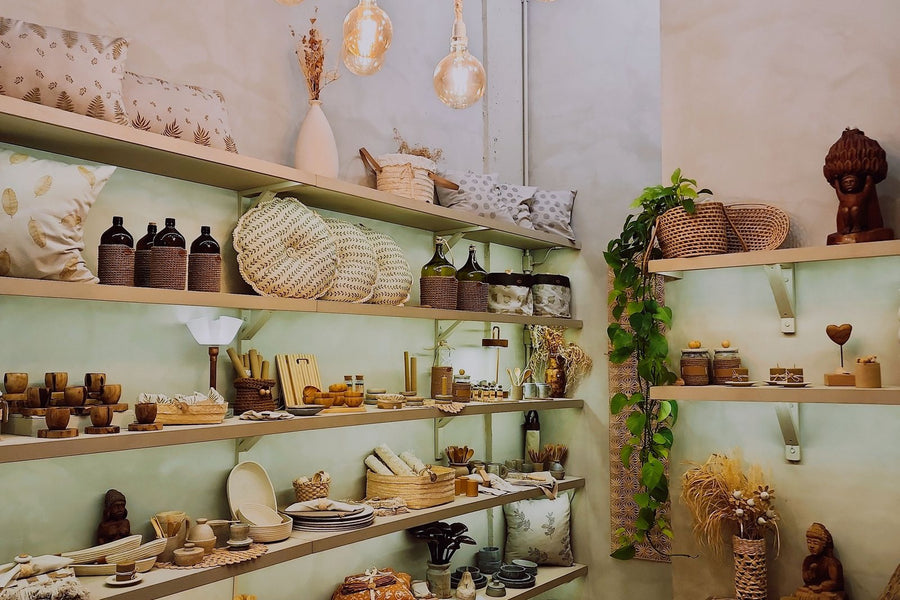
Shelves easily turn into visible storage. New books arrive, travel objects are added, small frames multiply, and soon every inch is utilized. At that point, valuable pieces and ordinary items begin to carry the same visual weight.
When reorganizing your shelf, try removing before adding. Emptiness is not a lack; it is the frame that makes an object visible.
Leave one section truly empty
As a start, keeping about one-third of the shelf surface empty can be a good exercise. This ratio is not a strict rule; the goal is to consciously start seeing the emptiness. Even a few extra centimeters around a single large ceramic piece or a group of books increases the piece's value.
Don't repeat the same formula in every compartment
The formula of three objects, two books, and one plant might seem orderly at first glance, but it becomes mechanical when repeated. Dedicate one shelf to a single large object, another to horizontal books, and leave another completely calm. Establish a rhythm between intensity and quietness.
Vertical books act as a tall block, while horizontal books function like a small platform. You can place objects on top, but don't make it difficult to reach the books you actually read.
The background is part of the composition
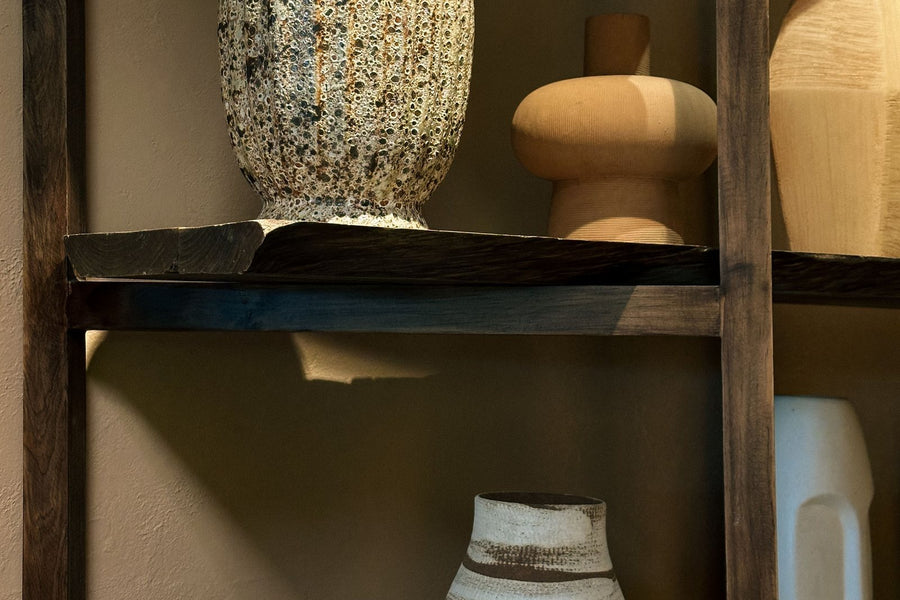
The wall color or the inner surface of the shelf creates an invisible bond between objects. When you fill every space, this background disappears. A dark sculpture on a light background, or light ceramics within a dark shelf, create strong silhouettes. If the tones are similar, surface texture and shadow become more important.
Rotate your personal archive
Souvenirs, photos, and small objects accumulate over time. Instead of trying to display them all at once, create a seasonal selection. Removing a few pieces does not diminish their value; they become visible again when they reappear.
Leave at least one section of the shelf free for daily life. If there's no space for a book being read, glasses, or temporary items, the selection quickly turns into clutter.